
Understanding your employees’ perspectives is crucial for fostering a thriving workplace. Employee engagement surveys offer a powerful tool to gauge satisfaction, commitment, and overall morale. By carefully crafting questions and analyzing the results, organizations can identify areas for improvement, boost productivity, and cultivate a more positive work environment. This guide explores the art of designing effective employee engagement surveys, from question types to result interpretation and actionable strategies for positive change.
This comprehensive resource delves into the multifaceted nature of employee engagement, examining various models and key drivers. We’ll cover different question types, best practices for unbiased phrasing, and methods for analyzing both quantitative and qualitative data. Ultimately, this guide aims to equip you with the knowledge and tools to conduct insightful surveys and translate those insights into tangible improvements for your workforce.
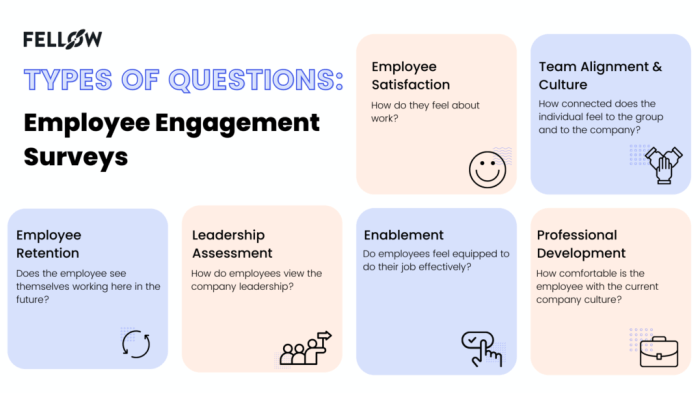
Types of Employee Engagement Survey Questions
Employee engagement surveys rely on a variety of question types to gather comprehensive data on employee experiences and attitudes. The choice of question type depends on the specific information sought and the desired level of detail in the responses. A balanced approach, using a mix of question types, is crucial for a robust and insightful survey.
Different question types offer unique advantages. For example, closed-ended questions, such as multiple-choice and Likert scale questions, are easy to analyze quantitatively, allowing for the identification of trends and patterns across the workforce. Open-ended questions, on the other hand, provide rich qualitative data, offering valuable insights into the nuances of employee experiences and perspectives.
Likert Scale Questions
Likert scale questions present respondents with a statement and ask them to rate their level of agreement or disagreement on a scale, typically ranging from strongly disagree to strongly agree. These questions are effective for measuring attitudes and opinions on specific aspects of the workplace. For example, a question might be: “My manager effectively communicates expectations.” The response options would then range from “Strongly Disagree” to “Strongly Agree,” allowing for a numerical representation of the responses.
This facilitates statistical analysis and identification of areas for improvement.
Multiple Choice Questions
Multiple choice questions provide respondents with a set of pre-defined options to choose from. They are useful for gathering data on specific behaviors, preferences, or demographics. For instance, a question might ask: “How often do you feel your work is meaningful?” with options such as “Always,” “Often,” “Sometimes,” “Rarely,” and “Never.” The simplicity of multiple-choice questions makes them easy to answer and analyze.
Open-Ended Questions
Open-ended questions allow respondents to provide detailed, free-form answers in their own words. These are invaluable for understanding the underlying reasons behind quantitative data and gaining a deeper understanding of employee experiences. Effective open-ended questions are concise, focused, and invite thoughtful responses. They avoid leading language and encourage honest feedback.
Examples of Effective Open-Ended Questions
Crafting effective open-ended questions is crucial for gaining valuable insights. Here are some examples:
- “What is the biggest challenge you face in your current role?”
- “Describe a time you felt particularly engaged in your work. What contributed to that experience?”
- “What suggestions do you have for improving communication within our team/department?”
- “What aspects of your work environment contribute to your overall job satisfaction?”
- “What could we do to better support your professional development?”
Best Practices for Phrasing Questions
To ensure accurate and unbiased results, careful attention must be paid to question phrasing. Best practices include:
- Using clear and concise language, avoiding jargon or technical terms.
- Avoiding leading questions that suggest a particular answer.
- Keeping questions focused on a single topic.
- Pre-testing the survey with a small group to identify any potential issues with clarity or wording.
- Ensuring anonymity and confidentiality to encourage honest responses.
Sample Employee Engagement Survey
This sample survey uses a combination of question types to assess different aspects of employee engagement.
- How satisfied are you with your current role? (Likert Scale: Strongly Disagree to Strongly Agree)
- How often do you feel valued and appreciated for your contributions? (Multiple Choice: Always, Often, Sometimes, Rarely, Never)
- How would you rate the level of communication within your team? (Likert Scale: Strongly Disagree to Strongly Agree)
- Do you feel you have the resources and support you need to succeed in your role? (Multiple Choice: Yes, No, Somewhat)
- What are your primary concerns regarding your current work environment? (Open-Ended)
- What suggestions do you have for improving employee engagement within the company? (Open-Ended)
- How would you describe the overall work-life balance at our company? (Likert Scale: Excellent, Good, Fair, Poor)
- How often do you receive feedback on your performance? (Multiple Choice: Regularly, Occasionally, Rarely, Never)
- What opportunities are there for professional development within the company? (Open-Ended)
Analyzing and Interpreting Survey Results
Analyzing and interpreting the data gathered from employee engagement surveys is crucial for understanding the workforce’s sentiment and identifying areas for improvement. Effective analysis combines quantitative and qualitative approaches to gain a comprehensive perspective. This process allows organizations to translate raw data into actionable insights, leading to more engaged and productive employees.
Quantitative Data Analysis Methods
Several methods exist for analyzing the numerical data collected from employee engagement surveys. These methods help to summarize and understand the overall trends and patterns within the responses. The choice of method depends on the specific research questions and the nature of the data.
- Descriptive Statistics: This involves calculating measures of central tendency (mean, median, mode) and dispersion (standard deviation, range) to summarize the distribution of responses for each question. For example, calculating the average score on a satisfaction scale provides a quick overview of overall employee satisfaction.
- Frequency Distributions: Creating frequency tables and charts (bar graphs, histograms) shows the number of responses for each answer option. This is particularly useful for multiple-choice questions, revealing the popularity of different responses.
- Cross-tabulation: This technique examines the relationship between two or more variables. For example, it could reveal if there’s a correlation between job satisfaction and department or tenure.
- Statistical Significance Testing: Tests like t-tests or ANOVA can determine if differences between groups (e.g., different departments) are statistically significant, ruling out random chance as the cause.
Qualitative Data Interpretation
Open-ended questions provide rich qualitative data that offers valuable context to the quantitative findings. Analyzing this data requires careful attention to detail and a systematic approach.
- Thematic Analysis: This involves identifying recurring themes and patterns in the responses. Researchers read through the responses multiple times, identifying key words, phrases, and concepts that emerge repeatedly. For example, repeated mentions of “lack of communication” would suggest a need for improved communication strategies.
- Content Analysis: This is a more structured approach where responses are categorized according to pre-defined codes or categories. This allows for a more quantitative analysis of qualitative data, enabling comparisons and identification of trends.
- Sentiment Analysis: While often automated, this involves assessing the overall sentiment (positive, negative, neutral) expressed in each response. This helps gauge the emotional tone surrounding different aspects of the workplace.
Identifying Trends and Patterns
Combining quantitative and qualitative analyses helps identify significant trends and patterns. This involves looking for correlations between different variables and identifying recurring themes in both types of data. For example, a low average score on a question about work-life balance (quantitative) coupled with numerous comments expressing stress and burnout (qualitative) points to a clear area for intervention.
Hypothetical Survey Results
The following table illustrates key findings from a hypothetical employee engagement survey. It showcases the integration of quantitative and qualitative insights.
| Question | Average Score (1-5) | Top Positive Theme | Top Negative Theme |
|---|---|---|---|
| Overall Job Satisfaction | 3.8 | Supportive Team | Workload |
| Work-Life Balance | 2.5 | Flexible Schedule (for some) | Long Hours/Overtime |
| Opportunities for Growth | 3.2 | Training Programs | Limited Advancement |
| Manager Support | 4.1 | Clear Communication | Lack of Feedback |
Improving Employee Engagement Based on Survey Results
Understanding and acting upon the insights gleaned from employee engagement surveys is crucial for fostering a positive and productive work environment. Ignoring the feedback risks decreased morale, higher turnover, and ultimately, reduced organizational success. This section Artikels actionable strategies to transform survey data into tangible improvements in employee engagement.Addressing issues identified through employee engagement surveys requires a systematic approach.
It’s not enough to simply acknowledge problems; concrete actions must be taken to resolve them. This involves prioritizing issues based on their severity and impact, allocating resources effectively, and tracking progress towards achieving the desired outcomes. A well-defined plan ensures accountability and demonstrates a commitment to employee well-being.
Actionable Strategies for Addressing Identified Issues
Effective strategies are multifaceted and should address the root causes of disengagement. For instance, if the survey reveals low levels of recognition, implementing a formal employee recognition program with clear criteria and regular implementation could be an effective solution. If work-life balance is a recurring concern, flexible work arrangements, improved vacation policies, or resources for stress management could be explored.
Addressing compensation concerns may require salary adjustments, improved benefits packages, or transparent communication regarding compensation structures. Each issue requires a tailored solution.
Developing a Plan for Implementing Changes
Implementing changes based on survey feedback requires careful planning and coordination. This involves creating a detailed plan that Artikels specific actions, assigns responsibilities, sets realistic timelines, and establishes clear metrics for measuring success. For example, a plan to improve communication might involve weekly team meetings, regular updates from leadership, and the establishment of a dedicated communication channel. The timeline might span several months, with specific milestones for each stage of the implementation.
Responsibilities should be clearly assigned to specific individuals or teams to ensure accountability.
Communicating Survey Results and Planned Actions
Transparency is paramount when communicating survey results and planned actions. Employees need to understand that their feedback has been heard and is being used to drive positive change. This can be achieved through various channels, including company-wide emails, town hall meetings, team meetings, and intranet updates. The communication should be clear, concise, and honest, acknowledging both successes and challenges.
It’s important to emphasize the commitment to continuous improvement and to solicit further feedback throughout the process. A visual representation of the results, such as charts and graphs, can make the information more accessible and engaging.
Step-by-Step Guide for Implementing Improvements
Implementing improvements based on survey data requires a structured approach. Following a step-by-step guide ensures a methodical and efficient process.
- Analyze Survey Results: Thoroughly review the data to identify key themes and areas needing improvement.
- Prioritize Issues: Rank issues based on their impact and feasibility of resolution. Focus on addressing the most critical issues first.
- Develop Action Plans: Create specific, measurable, achievable, relevant, and time-bound (SMART) goals for each identified issue.
- Assign Responsibilities: Delegate tasks to individuals or teams, ensuring clear accountability.
- Implement Changes: Put the action plans into effect, monitoring progress closely.
- Communicate Progress: Regularly update employees on the progress made towards achieving the goals.
- Evaluate Results: Measure the effectiveness of the implemented changes and make adjustments as needed.
- Repeat the Cycle: Conduct regular employee engagement surveys to monitor progress and identify new areas for improvement.
Employee Engagement Best Practices
Implementing effective employee engagement strategies is crucial for organizational success. A highly engaged workforce is more productive, innovative, and loyal, leading to improved bottom-line results and a positive work environment. This section explores key best practices that organizations can adopt to cultivate a thriving and engaged workforce.
Examples of Organizations with Strong Employee Engagement Initiatives
Many organizations are recognized for their commitment to employee engagement. Google, for example, is frequently cited for its generous benefits, emphasis on employee well-being, and opportunities for professional growth. Their investment in employee happiness translates into a highly productive and innovative workforce. Similarly, Salesforce, known for its strong company culture and focus on employee development, consistently ranks highly in employee satisfaction surveys.
These companies demonstrate that a commitment to employee engagement is not just a feel-good initiative but a strategic advantage. Other examples include companies like Southwest Airlines, renowned for its positive and supportive work environment, and SAS Institute, celebrated for its exceptional employee benefits and work-life balance initiatives. These organizations actively invest in creating a culture that values its employees, leading to high levels of engagement and retention.
The Role of Company Culture in Fostering Employee Engagement
Company culture plays a pivotal role in shaping employee engagement. A positive and supportive culture, characterized by open communication, trust, and mutual respect, significantly increases employee engagement. When employees feel valued, heard, and appreciated, they are more likely to be motivated and committed to their work. Conversely, a toxic or negative culture can lead to low morale, high turnover, and decreased productivity.
Cultivating a culture of recognition, providing opportunities for collaboration, and promoting work-life balance are essential elements in fostering a positive work environment and driving employee engagement. This often includes establishing clear values and mission statements that employees can align with and believe in.
The Importance of Regular Feedback and Recognition Programs
Regular feedback and recognition programs are essential for maintaining high levels of employee engagement. Providing consistent and constructive feedback allows employees to understand their strengths and areas for improvement, promoting continuous growth and development. Recognition programs, whether through formal awards or informal expressions of appreciation, demonstrate that the organization values its employees’ contributions. These programs can range from simple verbal praise to more formal reward systems, including bonuses, promotions, or public acknowledgment of achievements.
Regular feedback loops, including performance reviews, 360-degree feedback, and informal check-ins, ensure employees feel heard and supported. This ongoing communication fosters a sense of belonging and strengthens the employee-employer relationship.
Benefits of Providing Employees with Opportunities for Professional Development and Growth
Investing in employee professional development and growth is a critical aspect of fostering employee engagement. When employees feel that the organization is committed to their career advancement, they are more likely to be motivated and engaged. This investment can take many forms, including tuition reimbursement, mentorship programs, training workshops, and opportunities for advancement within the company. Providing opportunities for employees to learn new skills and take on new challenges keeps them engaged and prevents stagnation.
This demonstrates a commitment to their long-term success, fostering loyalty and reducing turnover. Furthermore, a skilled and well-trained workforce is more productive and innovative, contributing directly to the organization’s overall success.
Successfully implementing employee engagement surveys involves careful planning, insightful question design, and a commitment to acting upon the gathered feedback. By understanding the nuances of question types, analyzing results effectively, and translating data into actionable strategies, organizations can foster a more engaged and productive workforce. This leads not only to improved employee morale and retention but also to significant gains in overall business performance and sustained organizational success.
Remember, a truly engaged workforce is a key ingredient for a thriving business.
Common Queries
What is the ideal length for an employee engagement survey?
Aim for brevity. A shorter survey (10-15 minutes) boasts higher completion rates. Prioritize the most crucial questions.
How can I ensure anonymity and confidentiality in my survey?
Clearly state that responses are anonymous and confidential. Use a secure survey platform that protects data privacy. Avoid including any identifying information in the survey itself.
How often should I conduct employee engagement surveys?
Frequency depends on your organization’s needs, but annual or bi-annual surveys are common. Pulse surveys (shorter, more frequent checks) can provide valuable real-time feedback.
What should I do if the survey reveals negative feedback?
Address negative feedback transparently and promptly. Develop an action plan to resolve identified issues, communicate the plan to employees, and follow up to demonstrate your commitment to improvement.


