
Employee engagement isn’t just a buzzword; it’s the cornerstone of a thriving organization. A highly engaged workforce translates directly to increased productivity, improved retention, and a stronger bottom line. This exploration delves into the multifaceted aspects of cultivating a culture where employees feel valued, motivated, and invested in their work, examining strategies for fostering engagement and measuring its impact.
From defining employee engagement and differentiating it from mere satisfaction, we’ll journey through the key factors influencing it, both internal (leadership, recognition, opportunities) and external (economic climate, industry trends). We will then Artikel practical strategies for building and maintaining a culture of engagement, covering everything from innovative recognition programs to effective communication and ongoing feedback mechanisms. Ultimately, this guide aims to equip organizations with the tools and understanding necessary to build a truly engaged and successful workforce.
Defining Employee Engagement
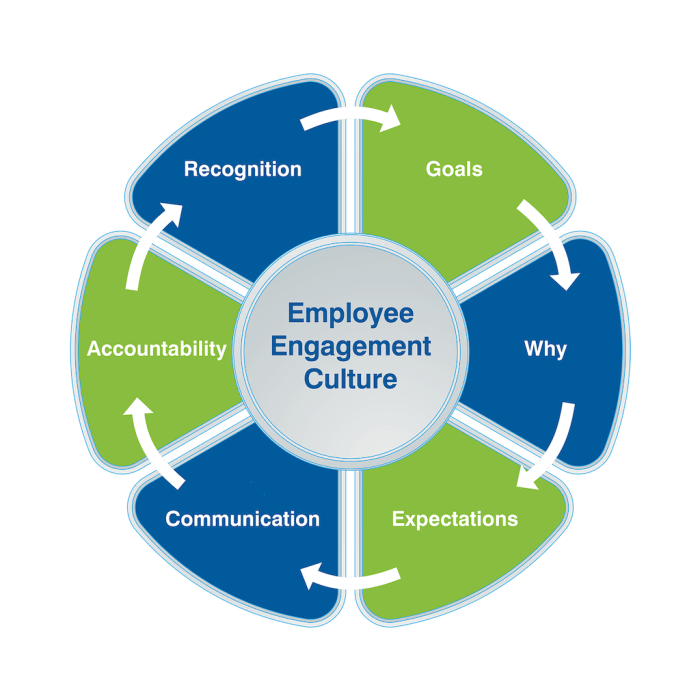
Employee engagement is a multifaceted concept crucial for organizational success. It goes beyond simple job satisfaction or motivation, representing a deeper connection and commitment employees feel towards their work, their colleagues, and the organization as a whole. Understanding the nuances of engagement, and how it differs from related concepts, is vital for cultivating a thriving workplace.Employee engagement is characterized by a heightened sense of enthusiasm, dedication, and involvement in one’s work.
It’s about employees actively contributing their best efforts, going above and beyond their formal job descriptions, and feeling a genuine sense of ownership and pride in their contributions. This differs from employee satisfaction, which primarily focuses on contentment with aspects of the job like compensation, benefits, and work-life balance. While satisfaction is important, it doesn’t necessarily translate to engagement.
Similarly, motivation, while related, is often triggered by external factors like incentives or rewards. Engagement, on the other hand, stems from a deeper intrinsic drive and a sense of purpose.
Key Characteristics of a Highly Engaged Workforce
A highly engaged workforce displays several key characteristics. These employees are typically proactive, taking initiative and suggesting improvements. They demonstrate strong commitment to the organization’s goals, aligning their personal objectives with the company’s vision. Furthermore, they readily share their knowledge and expertise with colleagues, fostering a collaborative and supportive work environment. They also exhibit higher levels of creativity and innovation, contributing fresh ideas and solutions.
Finally, they demonstrate strong loyalty and lower turnover rates, representing a stable and reliable workforce.
Measurable Impacts of High Employee Engagement on Organizational Performance
High employee engagement directly translates into significant improvements in key organizational performance indicators. Studies consistently show a strong correlation between higher engagement scores and increased productivity, profitability, and customer satisfaction. For example, a study by Gallup found that businesses with highly engaged workforces experience 147% higher earnings per share than those with low engagement. Furthermore, engaged employees tend to be more efficient, reducing waste and improving overall operational effectiveness.
Lower turnover rates, a direct consequence of high engagement, also result in significant cost savings associated with recruitment and training. Finally, engaged employees are more likely to provide exceptional customer service, leading to increased customer loyalty and positive word-of-mouth referrals. These positive impacts collectively contribute to a stronger, more sustainable, and ultimately more successful organization.
Factors Influencing Employee Engagement
Employee engagement, a state where employees are invested, enthusiastic, and committed to their work and organization, is significantly influenced by a complex interplay of internal and external factors. Understanding these factors is crucial for organizations aiming to cultivate a highly engaged workforce. This section will explore key internal and external influences, as well as the impact of various leadership styles.
Internal Factors Influencing Employee Engagement
Internal factors are those directly within the control of the organization. These factors often represent the most impactful levers for driving engagement. The following table highlights five key internal factors:
| Factor | Description | Impact on Engagement | Example |
|---|---|---|---|
| Managerial Support & Recognition | Supportive managers who provide regular feedback, coaching, and opportunities for growth. Recognition of contributions, both big and small. | Positive; increases motivation, job satisfaction, and commitment. | A manager regularly checks in with team members, provides constructive criticism, and publicly acknowledges individual and team achievements. |
| Opportunities for Growth & Development | Access to training, mentoring, and career advancement opportunities. Feeling valued and invested in by the organization. | Positive; fosters a sense of purpose and belonging, reduces employee turnover. | Providing tuition reimbursement for relevant courses, offering internal mentorship programs, and creating clear career progression paths. |
| Compensation & Benefits | Fair and competitive salaries, comprehensive benefits packages, and equitable reward systems. | Positive; improves job satisfaction and reduces turnover. However, insufficient compensation can severely damage engagement. | Offering a competitive salary, health insurance, paid time off, and retirement plan options. |
| Company Culture & Values | A positive, inclusive, and supportive work environment where employees feel respected and valued. Alignment between personal and organizational values. | Positive; enhances employee well-being, promotes teamwork and collaboration. | A company culture that emphasizes open communication, teamwork, and work-life balance. |
| Work-Life Balance | Opportunities for flexible work arrangements, reasonable workloads, and a culture that supports employee well-being. | Positive; reduces stress and burnout, improves overall job satisfaction and productivity. | Offering flexible working hours, remote work options, and generous parental leave policies. |
External Factors Influencing Employee Engagement
External factors, while less directly controllable, still exert a significant influence on employee engagement. These factors often relate to the broader economic, social, and political landscape.
Examples of external factors influencing employee engagement include:
- Economic conditions: Recessions or economic booms can significantly impact employee morale and job security, affecting their engagement levels.
- Industry trends and competition: A rapidly changing industry or intense competition can create stress and uncertainty, impacting engagement.
- Government regulations and policies: Changes in employment laws or tax policies can directly affect compensation and benefits, influencing employee satisfaction.
- Social and cultural shifts: Changes in societal values and expectations regarding work-life balance and employee rights can influence engagement levels.
- Technological advancements: Rapid technological changes can lead to skill gaps and anxieties, impacting engagement unless adequate training and support are provided.
Impact of Leadership Styles on Employee Engagement
Different leadership styles demonstrably impact employee engagement. Transformational leadership, characterized by inspiring vision, intellectual stimulation, and individualized consideration, generally fosters higher levels of engagement compared to transactional leadership, which focuses primarily on rewards and punishments. Laissez-faire leadership, offering minimal guidance, often results in lower engagement. Servant leadership, prioritizing employee needs and development, tends to cultivate high engagement. Autocratic leadership, characterized by centralized control and decision-making, can negatively impact engagement, though it can be effective in specific crisis situations.
The most effective approach often involves a blend of styles, adapting to the specific context and needs of the team and individuals.
The Role of Leadership in Fostering Engagement
Effective leadership is the cornerstone of a thriving, engaged workforce. A leader’s actions, behaviors, and communication style significantly impact employee morale, productivity, and overall commitment to the organization’s goals. Without strong, supportive leadership, even the best engagement initiatives are unlikely to succeed. Leaders aren’t just managers; they are the architects of a culture that either fosters or stifles employee engagement.Leaders who cultivate engagement actively promote a positive and supportive work environment.
This isn’t simply about offering perks or bonuses; it’s about creating a sense of belonging, purpose, and value for each team member. This involves understanding individual needs and aspirations and aligning them with the organization’s overall objectives. Such alignment fosters a sense of shared purpose, making employees feel their contributions are meaningful and impactful.
Leadership Behaviors that Promote Engagement
Effective leaders demonstrate a range of behaviors that contribute directly to employee engagement and job satisfaction. These behaviors consistently show a commitment to their team’s well-being and professional growth. They prioritize open communication, provide regular feedback, and actively listen to their team’s concerns. Furthermore, they actively seek out opportunities for their team to develop their skills and advance their careers.
Creating a Psychologically Safe Environment
A psychologically safe environment is crucial for fostering open communication and feedback. This means creating a space where employees feel comfortable expressing their opinions, concerns, and ideas without fear of retribution or judgment. Leaders can achieve this by modeling vulnerability, actively listening to dissenting opinions, and acknowledging that mistakes are opportunities for learning and growth. For example, a leader might initiate regular team meetings where open dialogue is encouraged and all ideas are treated with respect, regardless of their feasibility.
They might also implement anonymous feedback mechanisms to gather input without fear of identification. Another example could involve actively addressing instances of bullying or harassment swiftly and decisively, demonstrating a zero-tolerance policy for behaviors that undermine psychological safety. This creates a culture where employees feel valued and respected, leading to increased engagement and a more collaborative work environment.
Maintaining Employee Engagement Over Time
Sustaining high levels of employee engagement isn’t a one-time event; it’s an ongoing process requiring consistent effort and adaptation. A proactive approach, incorporating regular evaluation and adjustments, is crucial to ensure engagement remains a core strength of the organization. This requires a multifaceted strategy that addresses both the immediate needs and the long-term vision of the company and its workforce.Building a sustainable culture of engagement demands a strategic plan encompassing various initiatives.
Ignoring the dynamic nature of employee needs and the ever-changing work environment will ultimately lead to decreased engagement. Therefore, a flexible and responsive approach is paramount to long-term success.
Sustaining High Levels of Employee Engagement
A long-term plan for maintaining high levels of employee engagement should incorporate several key strategies. Firstly, regular pulse surveys and feedback mechanisms provide valuable insights into employee sentiment. Secondly, consistent recognition and reward programs reinforce positive behaviors and achievements. Thirdly, investment in employee development and growth opportunities demonstrates a commitment to their future within the organization.
Finally, fostering a strong sense of community and belonging through team-building activities and social events strengthens workplace relationships and morale. These combined efforts create a positive feedback loop, continuously reinforcing engagement. For example, a company could implement a quarterly survey to assess employee satisfaction, followed by targeted actions based on the feedback received. Simultaneously, a points-based reward system for exceeding expectations or demonstrating exceptional teamwork could further incentivize engagement.
Adapting Engagement Initiatives to Evolving Needs
Employee needs and expectations are constantly evolving, influenced by factors like generational shifts, technological advancements, and societal changes. To maintain engagement, organizations must adapt their initiatives accordingly. This involves actively monitoring industry trends, conducting regular employee focus groups, and remaining open to feedback and suggestions. For example, a company might find that younger employees value flexible work arrangements and opportunities for skill development more than older employees, who may prioritize job security and work-life balance.
Therefore, engagement initiatives should be tailored to meet the diverse needs of different employee segments. Regularly reviewing and updating engagement strategies based on data analysis and feedback loops ensures they remain relevant and effective.
The Importance of Ongoing Feedback and Communication
Open and consistent communication is the cornerstone of maintaining employee engagement. This involves creating multiple channels for feedback, such as suggestion boxes, employee forums, and regular one-on-one meetings between managers and employees. Actively soliciting feedback, listening to concerns, and taking action based on input demonstrates a commitment to employee voices. Transparent communication regarding company performance, strategic goals, and future plans keeps employees informed and invested.
For example, a company could implement a monthly newsletter highlighting company achievements and addressing employee questions directly. Regular town hall meetings provide a platform for open dialogue and address concerns in a transparent manner. This two-way communication fosters trust and ensures employees feel valued and heard.
Building a culture of employee engagement is a continuous journey, not a destination. By understanding the factors that influence engagement, implementing effective strategies, and consistently measuring and adapting initiatives, organizations can create a workplace where employees feel valued, motivated, and empowered to contribute their best. This ultimately leads to a more productive, innovative, and successful organization, benefiting both employees and the company as a whole.
The key is ongoing commitment, open communication, and a genuine focus on employee well-being.
Q&A
What’s the difference between employee engagement, satisfaction, and motivation?
Engagement goes beyond satisfaction (feeling content) and motivation (being driven). Engagement implies a deep emotional connection to the work, the organization, and its values, leading to discretionary effort and a commitment to success.
How can I measure the ROI of employee engagement initiatives?
Track key metrics like employee turnover, productivity, customer satisfaction, and profitability. Compare these before and after implementing engagement programs to assess the return on investment.
What if my engagement surveys reveal low scores?
Analyze the results to identify specific areas of concern. Conduct focus groups, one-on-one interviews, and utilize observation to understand the root causes. Then, create targeted action plans to address the issues.
How do I keep engagement initiatives fresh and relevant?
Regularly solicit feedback from employees to understand evolving needs and preferences. Stay updated on industry best practices and adapt your programs accordingly. Consider employee input when selecting new initiatives.


