
Employee engagement and productivity are intrinsically linked, forming the bedrock of a thriving organization. This exploration delves into the multifaceted relationship between engaged employees and heightened productivity, examining key performance indicators, influential factors, and effective strategies for cultivating a highly engaged workforce. We’ll uncover how fostering a positive work environment, providing development opportunities, and implementing robust recognition programs can significantly impact a company’s bottom line.
From understanding the psychological underpinnings of engagement to addressing common challenges like burnout and resistance to change, this guide offers a holistic approach to maximizing employee potential and achieving sustainable growth. We will explore practical methods for measuring the impact of engagement initiatives, analyzing data to identify areas for improvement, and presenting compelling results to stakeholders.
Factors Influencing Employee Engagement
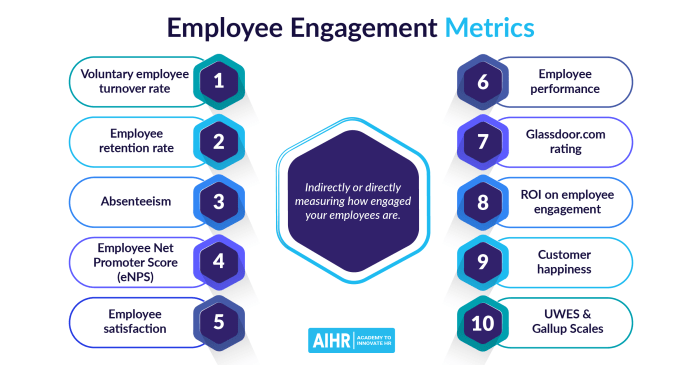
Employee engagement, the emotional commitment an employee has to their organization and its goals, is a crucial driver of productivity and overall success. Numerous internal and external factors contribute to an employee’s level of engagement; understanding these factors is key to fostering a thriving and productive workforce. This section will focus on key internal factors influencing engagement.
Top Three Internal Factors Impacting Employee Engagement
Three consistently significant internal factors influencing employee engagement are opportunities for growth and development, fair compensation and benefits, and a supportive and inclusive work environment. These factors directly impact an employee’s sense of value, purpose, and well-being within the organization. A lack in any of these areas can significantly decrease engagement levels.
The Role of Company Culture in Fostering Engagement
Company culture significantly shapes employee engagement. A positive and supportive culture, characterized by open communication, trust, and mutual respect, fosters a sense of belonging and encourages employees to contribute their best work. Conversely, a toxic or negative culture, marked by mistrust, negativity, and lack of recognition, can lead to disengagement, decreased productivity, and high turnover. A strong culture emphasizes shared values, promotes collaboration, and provides opportunities for employees to contribute meaningfully to the organization’s success.
For example, companies with strong cultures of innovation often see higher levels of employee engagement because employees feel empowered to contribute new ideas and solutions.
Impact of Management Styles on Employee Motivation and Engagement
Management style plays a pivotal role in influencing employee motivation and engagement. Authoritative, micromanaging styles often lead to decreased engagement as employees feel stifled and undervalued. In contrast, supportive and empowering leadership styles, which foster autonomy, provide regular feedback, and recognize achievements, significantly boost employee engagement. Effective managers create a psychologically safe environment where employees feel comfortable taking risks, asking questions, and expressing their ideas without fear of retribution.
For instance, a manager who regularly checks in with team members to understand their challenges and provide support demonstrates a commitment to their well-being and contributes to higher engagement levels. Conversely, a manager who only focuses on task completion without acknowledging individual contributions can foster feelings of resentment and disengagement.
Examples of Effective Employee Recognition and Reward Programs
Effective employee recognition and reward programs are essential for fostering engagement. These programs should go beyond simple monetary incentives and acknowledge both individual and team contributions. Examples include: peer-to-peer recognition programs where employees can publicly acknowledge each other’s accomplishments; spot bonuses for exceeding expectations or demonstrating exceptional initiative; opportunities for professional development and advancement; and company-wide celebrations to acknowledge significant milestones or achievements.
A well-structured program demonstrates that the company values its employees’ contributions and invests in their growth. For example, a company that offers tuition reimbursement for employees pursuing further education signals its commitment to their professional development and increases their sense of value within the organization.
Survey to Assess Employee Engagement Levels
To assess employee engagement levels within a hypothetical organization, “InnovateTech,” a survey could be designed with the following sections:
| Section | Questions (Examples) |
|---|---|
| Overall Engagement | On a scale of 1 to 5 (1 being strongly disagree, 5 being strongly agree), how engaged do you feel at InnovateTech? How likely are you to recommend InnovateTech as a place to work? |
| Work Environment | Do you feel supported by your colleagues and manager? Do you feel your opinions and ideas are valued? Do you believe InnovateTech provides a safe and inclusive work environment? |
| Growth and Development | Does InnovateTech provide opportunities for professional growth and development? Do you feel challenged and engaged in your work? Do you have clear goals and expectations for your role? |
| Compensation and Benefits | Are you satisfied with your compensation and benefits package? Do you feel fairly compensated for your contributions? |
| Recognition and Rewards | Do you feel your contributions are recognized and appreciated? Does InnovateTech have effective programs for recognizing and rewarding employees? |
| Open-ended Feedback | What can InnovateTech do to improve employee engagement? What are your suggestions for improving the workplace? |
The survey should be anonymous to encourage honest feedback and should be distributed widely across all departments and levels of the organization. Analysis of the results will provide valuable insights into areas for improvement and guide the development of targeted initiatives to boost employee engagement.
Strategies to Boost Employee Engagement
Boosting employee engagement requires a multifaceted approach focusing on communication, environment, development, and empowerment. Implementing effective strategies in these areas significantly impacts productivity, retention, and overall company success. This section details practical strategies to achieve these improvements.
Improving Communication Between Management and Employees
Open and transparent communication is the cornerstone of a highly engaged workforce. Effective communication fosters trust, reduces misunderstandings, and ensures everyone is aligned with organizational goals. This involves utilizing various channels and methods to ensure information reaches all employees effectively and efficiently.
- Regular Town Hall Meetings: These meetings provide a platform for leadership to share updates, address concerns, and foster open dialogue with employees. A successful town hall features opportunities for questions and feedback, creating a two-way communication flow.
- Employee Feedback Mechanisms: Implementing regular surveys, suggestion boxes, or anonymous feedback platforms allows employees to voice their opinions and concerns without fear of reprisal. This data can be invaluable in identifying areas for improvement.
- Transparent Communication of Company Performance: Sharing key performance indicators (KPIs) and financial information with employees fosters a sense of ownership and shared purpose. This transparency helps employees understand the company’s overall health and their role in its success.
- Utilizing Multiple Communication Channels: Employing a diverse range of communication methods—emails, intranet, team meetings, one-on-one conversations—ensures that information reaches employees through their preferred channels and caters to diverse learning styles.
Creating a Positive and Supportive Work Environment
A positive work environment characterized by respect, collaboration, and recognition significantly impacts employee engagement. Creating this environment requires a conscious effort from leadership and a commitment to fostering a culture of appreciation and inclusivity.
- Promoting a Culture of Recognition and Appreciation: Regularly acknowledging and rewarding employee contributions, both big and small, fosters a sense of value and belonging. This can involve verbal praise, formal awards, or small gestures of appreciation.
- Fostering Teamwork and Collaboration: Encouraging teamwork through collaborative projects, team-building activities, and cross-functional communication breaks down silos and promotes a sense of community. Teamwork creates opportunities for shared learning and mutual support.
- Prioritizing Work-Life Balance: Supporting employees in maintaining a healthy work-life balance through flexible work arrangements, generous vacation time, and wellness programs demonstrates a commitment to their well-being and reduces stress levels.
- Creating an Inclusive and Respectful Workplace: Establishing clear policies against harassment and discrimination, promoting diversity and inclusion initiatives, and providing training on unconscious bias creates a safe and welcoming environment for all employees.
Benefits of Offering Professional Development Opportunities
Investing in employee development demonstrates a commitment to their growth and career progression, fostering loyalty and increased engagement. Opportunities for professional growth can take many forms, each with its own advantages.
- Increased Employee Skills and Knowledge: Professional development directly enhances employees’ capabilities, leading to improved performance and productivity. This also increases their adaptability to new challenges and technological advancements.
- Improved Employee Morale and Motivation: Opportunities for learning and advancement boost employee morale and motivation, creating a more engaged and enthusiastic workforce. Knowing the company invests in their future increases job satisfaction.
- Enhanced Employee Retention: Investing in employee development signals a commitment to their long-term career prospects, increasing employee loyalty and reducing turnover. Employees are more likely to stay with a company that supports their growth.
- Strengthened Company Competitiveness: A highly skilled and knowledgeable workforce provides a competitive advantage in the marketplace. Investing in professional development ensures the company remains at the forefront of its industry.
Different Approaches to Employee Empowerment
Employee empowerment involves giving employees more autonomy and control over their work, fostering a sense of ownership and responsibility. Different approaches exist, each with its own strengths and weaknesses.
- Delegation of Authority: This involves entrusting employees with more responsibility and decision-making power within their roles. Effective delegation requires clear communication of expectations and providing the necessary resources and support.
- Participative Management: This approach involves actively involving employees in decision-making processes that affect their work. This can be achieved through team meetings, suggestion boxes, or employee feedback mechanisms.
- Self-Managed Teams: These teams operate with minimal managerial oversight, making their own decisions regarding work processes and resource allocation. This requires a high level of trust and a strong team dynamic.
Implementing an Employee Engagement Initiative: A Step-by-Step Guide
A successful employee engagement initiative requires a structured approach. This step-by-step guide Artikels the key phases involved.
- Assessment: Begin by assessing the current level of employee engagement through surveys, focus groups, and performance reviews. This provides a baseline for measuring progress.
- Goal Setting: Define clear, measurable, achievable, relevant, and time-bound (SMART) goals for the initiative. These goals should align with the overall business objectives.
- Strategy Development: Develop a comprehensive strategy outlining the specific actions to be taken to achieve the defined goals. This should incorporate the strategies discussed previously.
- Implementation: Implement the chosen strategies, ensuring consistent communication and support throughout the process. Regular monitoring is crucial.
- Evaluation: Regularly evaluate the effectiveness of the initiative by tracking key metrics and gathering employee feedback. Adjust the strategy as needed based on the evaluation findings.
Measuring the Impact of Engagement Initiatives
Measuring the effectiveness of employee engagement programs is crucial for demonstrating ROI and informing future strategies. A multi-faceted approach, combining quantitative and qualitative data, provides a comprehensive understanding of program impact. This allows organizations to refine initiatives and maximize their positive effects on employee productivity and overall business success.
Methods for Tracking Engagement Program Effectiveness
Several methods exist for tracking the success of engagement initiatives. These range from readily available metrics to more in-depth, qualitative assessments. A robust measurement strategy utilizes a combination of these approaches to gain a holistic view.
- Employee Surveys: Regularly administered surveys (e.g., quarterly or annually) gauge employee sentiment on various aspects of the workplace, including job satisfaction, management support, and opportunities for growth. These surveys can track changes in engagement levels over time, providing valuable insights into the effectiveness of specific initiatives.
- Pulse Surveys: Short, frequent surveys (e.g., weekly or monthly) address specific areas or concerns. They provide timely feedback on immediate issues and allow for rapid adjustments to engagement strategies.
- Focus Groups and Interviews: Qualitative data gathered through focus groups and individual interviews provide richer, contextual information about employee experiences. This data complements quantitative findings, offering deeper insights into the “why” behind engagement levels.
- Performance Metrics: Tracking key performance indicators (KPIs) such as productivity, absenteeism, turnover, and customer satisfaction can demonstrate a correlation between improved employee engagement and improved business outcomes.
- Observation and Feedback: Managers can actively observe employee behavior and solicit regular feedback to identify areas for improvement and gauge the impact of engagement initiatives. This method provides real-time insights into the effectiveness of interventions.
Data Analysis for Improvement
Analyzing engagement data involves identifying trends, patterns, and correlations between engagement levels and specific initiatives. This analysis guides future improvements and resource allocation.
- Benchmarking: Comparing engagement scores and KPIs against industry benchmarks helps organizations understand their relative performance and identify areas needing improvement.
- Correlation Analysis: Statistical analysis can reveal the correlation between specific engagement initiatives (e.g., employee recognition programs, training opportunities) and changes in engagement scores and productivity metrics.
- Segmentation Analysis: Analyzing data by demographic groups (e.g., department, tenure, age) helps identify specific populations with lower engagement and tailor initiatives to their needs.
- Root Cause Analysis: Investigating the underlying causes of low engagement scores helps organizations address the root problems, rather than just treating the symptoms.
Visual Representation of Engagement and Productivity
A scatter plot could effectively illustrate the correlation between engagement initiatives and productivity gains. The X-axis would represent the level of investment in engagement initiatives (e.g., budget allocated, number of programs implemented), while the Y-axis would represent a key productivity metric (e.g., sales per employee, project completion rate). Each data point would represent a specific time period or department, showing the relationship between investment in engagement and resulting productivity.
A positive correlation would be indicated by data points clustering along an upward-sloping line.
Presenting Engagement Data to Stakeholders
Presenting engagement data to stakeholders requires clear, concise communication that highlights key findings and actionable insights.
- Executive Summary: Begin with a brief summary of the key findings, highlighting the impact of engagement initiatives on key business outcomes.
- Visualizations: Use charts, graphs, and other visuals to present data in an easily digestible format. Avoid overwhelming stakeholders with complex data tables.
- Actionable Recommendations: Conclude with specific, actionable recommendations based on the data analysis. These recommendations should be aligned with the organization’s strategic goals.
- Storytelling: Frame the data within a compelling narrative that connects the findings to the overall business strategy and demonstrates the value of investment in employee engagement.
Examples of Successful Case Studies
Numerous case studies demonstrate the positive impact of engagement strategies on productivity. For example, companies that have invested in robust employee recognition programs have often reported significant improvements in employee morale, retention, and overall performance. Similarly, organizations that have implemented comprehensive training and development programs have seen increased employee skills, job satisfaction, and productivity. These case studies often showcase quantifiable improvements in key metrics, providing concrete evidence of the return on investment in employee engagement.
EMPLOYEE ENGAGEMENT
Employee engagement, far from being a simple metric, represents a multifaceted psychological state influencing an individual’s commitment to their work and organization. It encompasses elements of emotional connection, dedication, and active participation, extending beyond mere job satisfaction to a deeper sense of purpose and alignment with organizational goals.
Employee Engagement from a Psychological Perspective
From a psychological standpoint, employee engagement is linked to several key theories. Self-determination theory suggests that employees are more engaged when their needs for autonomy, competence, and relatedness are met. Job characteristics theory highlights the importance of skill variety, task identity, task significance, autonomy, and feedback in fostering engagement. These factors contribute to a sense of meaning and purpose in work, leading to increased motivation and commitment.
Conversely, a lack of these elements can lead to feelings of disengagement, burnout, and ultimately, decreased productivity. Understanding these psychological underpinnings is crucial for designing effective engagement strategies.
Impact of Employee Engagement on Employee Retention
Highly engaged employees are significantly more likely to remain with an organization. The emotional connection and sense of belonging fostered by engagement initiatives reduce turnover rates, saving companies substantial costs associated with recruitment, training, and lost productivity. Studies consistently show a strong positive correlation between employee engagement and retention; engaged employees are less likely to seek opportunities elsewhere because they feel valued, appreciated, and invested in the company’s success.
This translates to a more stable and experienced workforce, benefiting both the organization and its employees.
Link Between Employee Engagement and Customer Satisfaction
The connection between employee engagement and customer satisfaction is well-established. Engaged employees are more likely to provide excellent customer service, exceeding expectations and building positive relationships. Their enthusiasm and dedication are contagious, creating a positive work environment that translates to improved customer experiences. This positive feedback loop reinforces both employee morale and customer loyalty, ultimately contributing to increased profitability and a stronger brand reputation.
Companies with high levels of employee engagement often see higher customer satisfaction scores and increased customer retention.
Examples of Companies Known for Strong Employee Engagement Cultures
Several companies have cultivated strong reputations for their employee engagement strategies. Google, for example, is known for its generous benefits, employee-centric culture, and focus on innovation, fostering a highly engaged workforce. Similarly, Southwest Airlines prioritizes employee well-being and teamwork, creating a positive and supportive work environment that contributes to its exceptional customer service and high employee retention rates.
These companies understand that investing in employee engagement is not just a cost, but a strategic investment that yields significant returns.
Best Practices for Fostering a Highly Engaged Workforce
Creating a highly engaged workforce requires a multi-pronged approach. This includes providing opportunities for professional development, offering competitive compensation and benefits, promoting open communication and feedback channels, recognizing and rewarding employee contributions, and fostering a culture of trust and respect. Furthermore, empowering employees with autonomy and decision-making authority, promoting work-life balance, and creating a sense of purpose and meaning in their work are all crucial elements.
Regularly assessing employee engagement levels through surveys and feedback mechanisms is vital for identifying areas for improvement and ensuring that engagement initiatives remain effective and relevant.
Ultimately, boosting employee engagement isn’t merely about increasing productivity; it’s about cultivating a culture of purpose, fulfillment, and shared success. By understanding the factors that drive engagement, implementing effective strategies, and consistently measuring results, organizations can unlock the immense potential of their workforce, fostering a dynamic and thriving environment where employees feel valued, motivated, and empowered to contribute their best.
Key Questions Answered
What is the difference between employee satisfaction and employee engagement?
Satisfaction is a feeling of contentment; engagement involves active participation and commitment to the company’s goals. Engaged employees are not only satisfied but also actively contribute and go above and beyond.
How can I measure employee engagement without surveys?
Observe employee behavior: attendance, punctuality, collaboration, initiative-taking, and proactive problem-solving. Analyze turnover rates and absenteeism – lower rates often suggest higher engagement.
What if my employees are engaged but productivity remains low?
Examine processes and workflows. Inefficient systems or unclear goals can hinder productivity even with highly engaged employees. Focus on process improvement and clear goal setting.
How do I address an employee who is consistently disengaged?
Schedule a private meeting to understand their concerns. Listen actively and explore potential solutions collaboratively. Consider providing additional training, mentoring, or adjusting their role to better suit their skills and interests.


