
Boosting employee engagement is paramount for any organization striving for success. Employee engagement platforms and software offer a powerful suite of tools designed to foster a more connected, productive, and satisfied workforce. These platforms leverage technology to streamline communication, recognize achievements, gather feedback, and ultimately, cultivate a thriving company culture. This guide explores the various facets of these platforms, from selection and implementation to measuring their effectiveness.
From enhancing internal communication and streamlining feedback mechanisms to recognizing employee contributions and fostering a sense of community, these platforms provide a holistic approach to improving employee experience. Understanding the benefits, choosing the right platform, and implementing it effectively are crucial steps in maximizing ROI and creating a more engaged and productive workforce. This guide aims to provide a comprehensive overview of these critical aspects.
Benefits of Implementing Employee Engagement Platforms
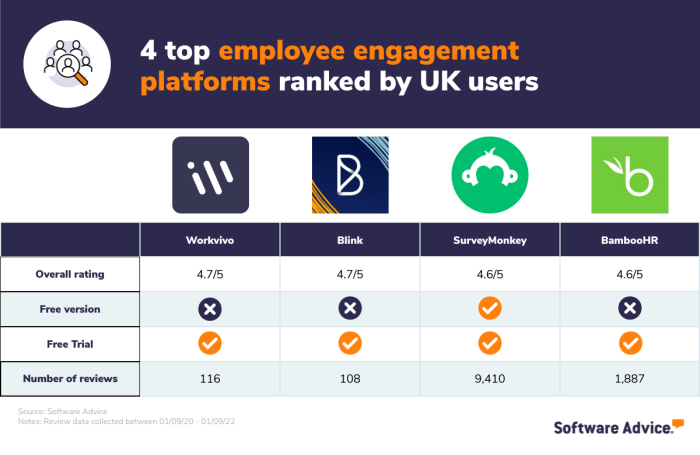
Investing in an employee engagement platform offers significant returns beyond simply boosting morale. These platforms provide a structured approach to improving communication, fostering collaboration, and ultimately driving key business outcomes. The benefits extend far beyond simple “feel-good” factors, impacting the bottom line in measurable ways.Employee productivity and morale are intrinsically linked. Disengaged employees are less productive, more prone to errors, and often contribute less creatively to team projects.
Engagement platforms directly address this by providing tools for streamlined communication, efficient task management, and opportunities for recognition and reward. This leads to a more motivated and focused workforce.
Impact on Employee Productivity and Morale
Effective employee engagement platforms streamline workflows, centralize communication, and provide employees with the tools they need to succeed. Features like instant messaging, project management tools, and feedback mechanisms reduce bottlenecks and improve collaboration, resulting in increased output and higher quality work. Regular recognition and reward systems, often integrated into these platforms, boost morale and foster a sense of appreciation, leading to increased job satisfaction and reduced employee turnover.
For example, a study by Gallup found that highly engaged business units experience 21% greater profitability.
Fostering a Stronger Company Culture
Employee engagement platforms act as a central hub for company culture. They provide opportunities for employees to connect with each other, share ideas, and participate in company initiatives. Features such as social feeds, internal blogs, and forums facilitate communication and collaboration across departments, breaking down silos and building a stronger sense of community. This creates a more inclusive and supportive work environment, leading to improved employee relationships and a more positive overall company culture.
For instance, a company using a platform to highlight employee achievements and celebrate milestones can significantly boost team spirit and morale.
Improved Employee Engagement and Retention Rates
When employees feel valued, heard, and appreciated, they are more likely to remain with the company. Employee engagement platforms directly contribute to this by providing channels for feedback, recognition, and open communication. Regular pulse surveys, feedback forms, and one-on-one meeting scheduling features enable managers to stay connected with their teams, address concerns promptly, and demonstrate a genuine interest in employee well-being.
This proactive approach leads to higher employee satisfaction and significantly reduces turnover, saving the company money on recruitment and training costs. Studies have consistently shown a strong correlation between employee engagement and retention.
Return on Investment (ROI) of Employee Engagement Software
Implementing an employee engagement platform represents a strategic investment, not just an expense. The ROI can be significant and multifaceted.
- Reduced employee turnover: Lower recruitment and training costs.
- Increased productivity: Higher output and improved efficiency.
- Improved employee morale: Reduced absenteeism and presenteeism.
- Enhanced collaboration: Streamlined workflows and better communication.
- Stronger company culture: Increased employee loyalty and advocacy.
- Better decision-making: Improved communication and feedback loops.
Choosing the Right Employee Engagement Platform
Selecting the optimal employee engagement platform is crucial for maximizing its impact on your workforce. The right platform will streamline communication, foster collaboration, and ultimately boost productivity and morale. A poorly chosen platform, however, can lead to wasted resources and even decreased engagement. Careful consideration of several key factors is essential for a successful implementation.
Key Factors to Consider When Selecting a Platform
Several critical factors must be weighed when choosing an employee engagement platform. These factors directly impact the platform’s effectiveness and overall return on investment (ROI). Ignoring these considerations can lead to a mismatch between the platform’s capabilities and your organization’s specific needs.
- Budget: Establish a clear budget before beginning your search. Pricing models vary widely, from subscription-based fees dependent on the number of users to one-time licensing costs for on-premise solutions. Consider not only the initial investment but also ongoing maintenance and support costs.
- Company Size and Structure: The platform’s scalability is vital. A small business with a flat organizational structure will have different needs than a large multinational corporation with complex hierarchies. The chosen platform must accommodate your current size and have the capacity to grow with your company.
- Employee Demographics and Tech Savviness: Consider your employees’ technological proficiency and preferences. A platform with an intuitive interface and user-friendly design will ensure higher adoption rates. Think about generational differences and accessibility needs to ensure inclusivity.
- Integration Capabilities: The platform should seamlessly integrate with your existing HR systems, communication tools (like Slack or Microsoft Teams), and other relevant software to avoid data silos and enhance efficiency. Consider APIs and data exchange capabilities.
Deployment Models: Cloud-Based vs. On-Premise
The choice between cloud-based and on-premise deployment significantly impacts cost, security, and maintenance. Understanding the advantages and disadvantages of each is crucial for informed decision-making.
| Feature | Cloud-Based | On-Premise |
|---|---|---|
| Cost | Typically lower initial investment, subscription-based fees | Higher initial investment, potential for ongoing maintenance costs |
| Scalability | Highly scalable, easily accommodates growth | Requires significant upfront planning for scalability |
| Security | Relies on the vendor’s security infrastructure | Greater control over security, but requires dedicated resources |
| Maintenance | Vendor handles updates and maintenance | Requires internal IT resources for maintenance and updates |
| Accessibility | Accessible from anywhere with an internet connection | Limited to internal network access |
Decision-Making Flowchart for Platform Selection
A structured approach to platform selection is vital. The following flowchart Artikels a logical decision-making process:
Start -> Define Requirements (Budget, Size, Demographics) -> Evaluate Platforms (Features, Deployment) -> Conduct Trials -> Select Platform -> Implement and Monitor.
Essential Features Checklist
A comprehensive feature checklist ensures you select a platform that meets your organization’s specific needs. This checklist focuses on key functionality for effective employee engagement.
- Communication Tools: Internal messaging, announcements, polls, surveys, and feedback mechanisms.
- Collaboration Features: Document sharing, project management tools, and team spaces.
- Recognition and Rewards: Systems for peer-to-peer recognition, awards, and incentives.
- Performance Management: Goal setting, progress tracking, and performance reviews.
- Learning and Development: Access to training resources, online courses, and knowledge bases.
- Analytics and Reporting: Data-driven insights into employee engagement levels and platform usage.
- Mobile Accessibility: Access to the platform via mobile devices for enhanced flexibility.
Strategies for Successful Implementation
Successfully integrating an employee engagement platform requires a strategic approach that considers both technological integration and the human element. A well-planned implementation minimizes disruption, maximizes adoption, and ultimately drives a positive return on investment. This involves careful planning, effective communication, and ongoing support.
Successful implementation hinges on a multi-faceted strategy that addresses technical integration, user adoption, and ongoing support. Ignoring any of these elements can significantly impact the platform’s effectiveness and overall return on investment. A phased approach, coupled with consistent communication and training, ensures a smooth transition and fosters a positive user experience.
Integrating the Platform into Existing Workflows
Seamless integration with existing systems and workflows is crucial for maximizing user acceptance and minimizing disruption. This requires careful consideration of current processes and how the new platform can enhance, rather than replace, existing tools. For example, if employees currently use a specific project management software, the engagement platform should ideally integrate with it, allowing for a centralized information hub.
This avoids creating additional work for employees and encourages consistent use. A thorough audit of current systems and processes is a necessary first step, identifying potential integration points and areas requiring modification. Careful consideration should also be given to data migration to ensure a smooth transition of relevant information.
Ensuring Employee Adoption and Engagement
Encouraging widespread adoption and sustained engagement requires a multi-pronged approach that addresses both the practical and emotional aspects of using a new platform. This includes clear communication about the platform’s benefits, providing comprehensive training, and fostering a culture of open feedback. Pre-launch communication should highlight the platform’s value proposition, focusing on how it will improve workflows and enhance the employee experience.
This could include showcasing success stories from other organizations or departments. Post-launch, consistent communication and ongoing support are crucial to address any issues and maintain momentum.
Ongoing Training and Support
Ongoing training and readily available support are essential for maintaining user engagement and maximizing the platform’s functionality. Initial training should cover core features and functionalities, while subsequent sessions can focus on advanced features or address specific user needs. A comprehensive help center, FAQs, and readily accessible support channels are crucial for addressing any challenges users may encounter. Consider implementing regular “office hours” or virtual Q&A sessions with platform administrators to provide additional support and address concerns.
Regular updates and training sessions will help keep employees informed of new features and best practices, fostering continuous improvement and engagement.
Step-by-Step Implementation Plan
A well-defined implementation plan with clear timelines and milestones is critical for success. This plan should be broken down into manageable phases, each with specific deliverables and responsible parties.
- Phase 1: Assessment and Planning (1-2 months): This involves needs analysis, vendor selection, platform configuration, and initial training material development. Key milestones include completing a needs assessment, selecting a vendor, and finalizing the implementation timeline.
- Phase 2: Platform Setup and Integration (2-3 months): This phase focuses on platform setup, integration with existing systems, data migration, and initial user testing. Milestones include completing system integration, data migration, and successful completion of internal testing.
- Phase 3: Launch and Training (1-2 months): This phase includes a phased rollout to different employee groups, comprehensive training sessions, and ongoing support. Milestones include the official platform launch and completion of initial training sessions for all employees.
- Phase 4: Monitoring and Optimization (Ongoing): This phase involves continuous monitoring of platform usage, gathering feedback, and making necessary adjustments. Milestones include regular platform usage reports, feedback collection, and iterative platform improvements based on user input.
Measuring the Effectiveness of Employee Engagement Initiatives
Measuring the effectiveness of employee engagement initiatives is crucial for demonstrating ROI and informing future strategies. A robust measurement system allows organizations to understand what’s working, what’s not, and to make data-driven adjustments to improve employee experience and overall business performance. This involves identifying key metrics, collecting relevant data, and effectively communicating results to stakeholders.
Key Metrics for Tracking Employee Engagement Program Success
Tracking the success of employee engagement programs requires a multifaceted approach, utilizing a range of key performance indicators (KPIs). These metrics should align with the overall business objectives and the specific goals of the engagement initiatives. A balanced scorecard approach, incorporating financial, customer, internal processes, and learning & growth perspectives, provides a holistic view.
Examples of key metrics include:
- Employee Satisfaction Scores (e.g., from surveys and feedback mechanisms): High scores indicate positive sentiment and a favorable work environment.
- Employee Net Promoter Score (eNPS): Measures employee willingness to recommend the company as a place to work.
- Turnover Rate: Lower turnover suggests higher employee engagement and satisfaction.
- Productivity Metrics: Increased productivity can be a direct indicator of improved engagement and motivation.
- Absenteeism Rate: Lower absenteeism suggests improved well-being and engagement.
- Employee Participation Rates in Engagement Initiatives: High participation shows active involvement and interest.
- Goal Achievement Rates: Tracking progress toward organizational goals helps assess the impact of engagement initiatives.
Methods for Collecting Employee Feedback and Measuring Satisfaction
Gathering employee feedback is essential for understanding their experiences and identifying areas for improvement. Multiple methods should be employed to capture a comprehensive picture and ensure diverse voices are heard.
Effective methods include:
- Employee Surveys: Regular pulse surveys and annual engagement surveys provide valuable data on satisfaction, morale, and perceptions of the workplace.
- Focus Groups: Facilitated discussions with small groups of employees offer rich qualitative insights.
- One-on-One Meetings: Regular check-ins between managers and employees provide opportunities for feedback and address concerns directly.
- Stay Interviews: Proactive conversations with employees to understand their reasons for staying with the company, revealing engagement drivers.
- Feedback Platforms: Dedicated platforms allow for anonymous feedback, suggestions, and recognition.
- Exit Interviews: Understanding reasons for departure helps identify areas for improvement in employee engagement.
Sample Dashboard Visualizing Key Engagement Metrics
A well-designed dashboard provides a clear and concise overview of key engagement metrics. This allows for quick identification of trends, areas of strength, and areas needing attention.
| Metric | Current Value | Target Value | Trend |
|---|---|---|---|
| Employee Satisfaction Score | 85% | 90% | Increasing |
| eNPS | 60 | 70 | Stable |
| Turnover Rate | 5% | 3% | Decreasing |
| Productivity (Units per employee) | 120 | 130 | Increasing |
| Absenteeism Rate | 2% | 1% | Decreasing |
Effective Reporting Strategies to Communicate Results to Stakeholders
Communicating results effectively is crucial for securing buy-in and driving continuous improvement. Reports should be tailored to the audience and highlight key findings and actionable insights.
Effective reporting strategies include:
- Regular Reporting: Provide updates on key metrics at regular intervals (e.g., monthly, quarterly).
- Visualizations: Use charts, graphs, and dashboards to present data clearly and concisely.
- Actionable Insights: Highlight key findings and suggest specific actions to address areas for improvement.
- Storytelling: Frame the data within a narrative that connects to business objectives and employee experiences.
- Stakeholder-Specific Reporting: Tailor reports to the needs and interests of different stakeholders (e.g., executives, managers, employees).
Implementing employee engagement platforms is not merely a technological upgrade; it’s a strategic investment in the human capital of your organization. By carefully considering the factors discussed—from choosing the right platform and ensuring seamless integration to consistently measuring effectiveness—businesses can unlock the full potential of their workforce. The result is a more engaged, productive, and ultimately, successful organization, built on a foundation of strong employee relationships and a vibrant company culture.
FAQ Insights
What is the average cost of employee engagement platforms?
Costs vary greatly depending on features, number of users, and vendor. Expect a range from free (limited features) to thousands of dollars per month for enterprise-level solutions.
How long does it typically take to implement an employee engagement platform?
Implementation time depends on platform complexity and company size. Smaller organizations might see results within weeks, while larger ones may require several months.
What are the key metrics to track the success of an employee engagement platform?
Key metrics include employee satisfaction scores, participation rates in platform activities, productivity levels, and employee retention rates.
Can employee engagement platforms integrate with existing HR systems?
Many platforms offer integrations with popular HR systems, enabling seamless data flow and a more unified employee experience. Check for specific integrations before selecting a platform.


