
Boosting employee engagement in large organizations presents a unique challenge, demanding a multifaceted approach that transcends simple motivational tactics. It requires a deep understanding of the organizational culture, leadership styles, and the specific needs of a diverse workforce. This exploration delves into practical strategies, technological solutions, and cultural shifts necessary to foster a truly engaged and productive environment within large-scale enterprises.
We’ll examine the impact of effective communication, recognition programs, and opportunities for growth, while also addressing common barriers and potential pitfalls.
Successfully navigating the complexities of employee engagement in large organizations hinges on a clear understanding of its multifaceted nature. It’s not merely about employee satisfaction or motivation; it’s about fostering a deep sense of connection, purpose, and commitment to the organization’s goals. This involves creating a supportive and inclusive work environment, providing opportunities for growth and development, and recognizing and rewarding employees for their contributions.
This comprehensive guide will equip you with the knowledge and tools to effectively enhance employee engagement within your own organization.
Defining Employee Engagement in Large Organizations
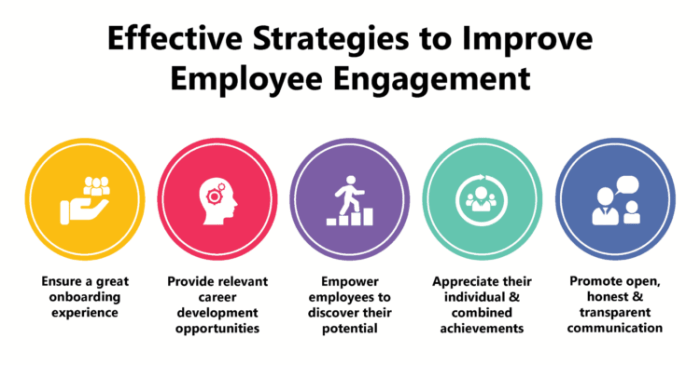
Employee engagement in large organizations is a multifaceted concept crucial for organizational success. It’s distinct from simple job satisfaction or motivation, encompassing a deeper level of commitment and discretionary effort. Understanding these nuances is critical for effectively implementing engagement strategies.Employee engagement represents the extent to which employees invest themselves, both emotionally and intellectually, in their work and their organization.
It goes beyond simply showing up and completing tasks; it involves a proactive and enthusiastic contribution to the company’s goals. Job satisfaction, on the other hand, focuses on an employee’s overall contentment with their work environment, compensation, and benefits. Motivation, while related, primarily concerns the internal drive to perform tasks, often influenced by incentives and goals. An engaged employee is typically both satisfied and motivated, but satisfaction and motivation alone don’t guarantee engagement.
Observable Behaviors Indicative of High and Low Employee Engagement
High levels of employee engagement manifest in various observable behaviors within a large organization. Highly engaged employees are often proactive problem-solvers, consistently exceeding expectations and volunteering for extra responsibilities. They actively participate in team discussions, offer constructive feedback, and demonstrate a strong sense of ownership over their work. They also act as ambassadors for the company, positively representing it to external stakeholders.
Conversely, low engagement is marked by apathy, disinterest, and a reluctance to go above and beyond. These employees may frequently arrive late, leave early, and show minimal enthusiasm for their work. They are less likely to participate in team activities, offer feedback, or take initiative. They may also exhibit higher rates of absenteeism and turnover.
Impact of High and Low Employee Engagement on Organizational Performance
The impact of employee engagement on organizational performance is substantial and demonstrably significant. High engagement correlates strongly with increased productivity, improved quality of work, higher profitability, and lower employee turnover. For example, companies with highly engaged workforces often experience significantly higher customer satisfaction ratings, reflecting the positive attitude and dedication employees bring to customer interactions. A Gallup study found that businesses in the top quartile of employee engagement outperform those in the bottom quartile by 147% in earnings per share.
Conversely, low engagement leads to decreased productivity, higher error rates, increased absenteeism and presenteeism (being physically present but mentally disengaged), and ultimately, reduced profitability. High turnover costs associated with replacing disengaged employees further strain organizational resources. A study by the Corporate Executive Board found that disengaged employees cost U.S. companies $450-$550 billion annually in lost productivity. This includes the costs of recruiting, training, and onboarding new employees, as well as the lost productivity during the transition period.
Identifying Barriers to Employee Engagement
Employee engagement in large organizations is a multifaceted challenge, often hampered by systemic issues and managerial practices. Understanding these obstacles is crucial for developing effective strategies to boost employee morale and productivity. This section will explore common barriers, focusing on structural limitations, cultural influences, and the impact of leadership styles.
Large corporate structures often present inherent obstacles to employee engagement. Bureaucracy, for instance, can create layers of unnecessary complexity, slowing down decision-making processes and frustrating employees who feel their contributions are undervalued or ignored. Inefficient communication channels can lead to misunderstandings, missed deadlines, and a sense of disconnect between management and staff. Similarly, a lack of recognition for individual achievements, both big and small, can demotivate employees and erode their sense of value within the organization.
These factors, when combined, can significantly impact overall engagement levels.
Company Culture’s Influence on Employee Engagement
Company culture plays a pivotal role in shaping employee experiences and engagement levels. A positive and supportive culture, characterized by open communication, trust, and mutual respect, fosters a sense of belonging and encourages employees to contribute their best work. Conversely, a negative or toxic culture, marked by fear, distrust, or a lack of inclusivity, can significantly damage employee morale and productivity, leading to high turnover rates and low engagement.
For example, a culture that prioritizes individual achievement over teamwork might inadvertently discourage collaboration and shared success, ultimately hindering overall engagement. A culture that actively promotes work-life balance, on the other hand, demonstrates respect for employees’ well-being and can lead to increased loyalty and engagement.
Leadership Styles and Their Impact on Employee Engagement
The leadership style employed within an organization significantly impacts employee engagement. Different leadership approaches elicit varying responses from employees, affecting their motivation, job satisfaction, and overall commitment.
| Style | Description | Impact on Engagement | Examples |
|---|---|---|---|
| Transformational | Inspires and motivates employees by setting a clear vision and fostering a sense of purpose. Focuses on empowering employees and encouraging growth. | Generally high engagement due to increased motivation, autonomy, and sense of purpose. | A CEO who clearly articulates the company’s mission and inspires employees to strive for excellence; a manager who mentors and supports their team’s professional development. |
| Transactional | Focuses on setting clear goals, providing rewards for performance, and correcting errors. Relies on a system of rewards and punishments to motivate employees. | Engagement can vary; high if rewards are perceived as fair and attainable, low if employees feel micromanaged or unappreciated. | A manager who sets clear performance targets and provides bonuses for exceeding expectations; a supervisor who uses disciplinary actions to address poor performance. |
| Laissez-faire | Provides minimal guidance or direction, allowing employees significant autonomy. | Engagement can be low due to lack of direction, support, and feedback; high only if employees are highly self-motivated and skilled. | A manager who delegates tasks and provides minimal oversight; a team leader who allows team members to work independently without regular check-ins. |
Strategies for Enhancing Employee Engagement
Boosting employee engagement in large organizations requires a multifaceted approach that addresses communication, recognition, and professional development. These strategies, when implemented effectively, can significantly improve employee morale, productivity, and retention. The key is to create a culture where employees feel valued, supported, and empowered to contribute their best work.
Improving Communication and Transparency
Open and honest communication is the cornerstone of a highly engaged workforce. Effective communication channels ensure that information flows freely and consistently throughout the organization, preventing misunderstandings and fostering a sense of inclusivity. A lack of transparency can lead to decreased trust and ultimately, lower engagement.
- Regular Town Hall Meetings: These meetings, held frequently (e.g., monthly or quarterly), provide a platform for leadership to directly address employee concerns, share company updates, and solicit feedback. Live Q&A sessions can further enhance transparency and engagement.
- Internal Communication Platforms: Utilizing intranets, instant messaging services, or dedicated employee apps facilitates quick and easy dissemination of information, fostering a sense of community and real-time updates.
- Transparent Performance Metrics: Sharing key performance indicators (KPIs) and company goals with employees promotes understanding of their role in the bigger picture and encourages collaborative effort towards common objectives. This transparency fosters a sense of ownership and accountability.
- Feedback Mechanisms: Implementing regular employee surveys, suggestion boxes, or 360-degree feedback systems allows for continuous improvement and demonstrates a commitment to employee input. Analyzing this feedback and taking action based on the results is crucial.
- Manager Training on Communication: Equipping managers with the skills to effectively communicate with their teams, including active listening and providing constructive feedback, is vital for creating a supportive work environment.
Designing an Employee Recognition and Rewards Program
A robust recognition and rewards program is critical for fostering a culture of appreciation and acknowledging employee contributions. This program should be multifaceted, recognizing both individual and team achievements, and aligning with company values. A well-structured program goes beyond simple monetary incentives and focuses on celebrating individual and team accomplishments.
A comprehensive program might include:
- Peer-to-Peer Recognition: Allowing employees to recognize and appreciate each other’s contributions strengthens teamwork and fosters a positive work environment. This could involve a points-based system or a simple public acknowledgement system.
- Managerial Recognition: Managers should actively acknowledge and reward employee achievements, both formally (e.g., performance reviews, awards) and informally (e.g., verbal praise, small gestures of appreciation).
- Company-Wide Awards: Establishing annual or quarterly awards for outstanding performance, innovation, or teamwork creates a sense of competition and celebrates exceptional contributions. These awards should be publicized widely to reinforce the value of the achievements.
- Non-Monetary Rewards: Offering rewards such as extra vacation time, flexible work arrangements, opportunities for professional development, or public acknowledgment can be highly motivating and demonstrate genuine appreciation.
- Incentive Programs: Well-designed incentive programs, tied to specific goals and performance metrics, can motivate employees to achieve exceptional results. These programs should be transparent and easily understood.
Providing Opportunities for Professional Growth and Development
Investing in employee growth and development demonstrates a commitment to their future and fosters a culture of continuous learning. This investment not only benefits individual employees but also enhances the organization’s overall capabilities and competitiveness. A strategic approach to professional development should cater to individual needs and career aspirations.
A robust professional development plan might include:
- Mentorship Programs: Pairing experienced employees with newer or less experienced colleagues provides valuable guidance, support, and networking opportunities. This fosters a culture of knowledge sharing and helps develop future leaders.
- Training Initiatives: Offering a wide range of training programs, including technical skills training, leadership development, and soft skills workshops, ensures that employees have the skills and knowledge needed to succeed in their roles and advance their careers. These initiatives should be tailored to the needs of the organization and its employees.
- Tuition Reimbursement: Supporting employees’ pursuit of further education through tuition reimbursement demonstrates a commitment to their long-term development and can attract and retain top talent.
- Internal Mobility Opportunities: Creating opportunities for employees to move to different roles or departments within the organization allows them to broaden their skills and experience, and fosters career progression within the company.
- Career Development Plans: Working with employees to create individual career development plans helps them identify their goals and develop a roadmap for achieving them. Regular check-ins and feedback are essential for success.
Ultimately, increasing employee engagement in large organizations is a continuous journey, not a destination. It requires consistent effort, ongoing evaluation, and a commitment to adapting strategies based on feedback and changing circumstances. By implementing the strategies Artikeld – from improving communication and recognition to leveraging technology and fostering a strong organizational culture – organizations can cultivate a workforce that is not only highly engaged but also deeply invested in the success of the company.
The result is a more productive, innovative, and ultimately, more profitable organization.
FAQ Overview
What are the key differences between employee engagement, satisfaction, and motivation?
Engagement is a deep emotional connection to the work and the organization. Satisfaction is a more superficial feeling of contentment. Motivation is the drive to achieve goals. Engagement encompasses both satisfaction and motivation, leading to greater commitment and discretionary effort.
How can I measure the ROI of employee engagement initiatives?
Track key performance indicators (KPIs) like productivity, retention rates, customer satisfaction, and employee turnover. Compare these metrics before and after implementing engagement initiatives to assess the return on investment.
How do I address resistance to change when implementing new engagement strategies?
Communicate clearly and transparently about the reasons for change, involve employees in the process, address concerns proactively, and celebrate early successes to build momentum and overcome resistance.
What are some cost-effective ways to improve employee engagement?
Focus on improving communication, providing regular feedback, recognizing employee contributions (even small gestures), and fostering a positive work environment. These methods often require minimal financial investment but yield significant results.


