
Thriving small businesses understand that engaged employees are the cornerstone of success. Unlike larger corporations with established HR departments, small businesses often need creative, cost-effective strategies to foster a positive and productive work environment. This guide explores practical, actionable ideas to boost employee engagement, leading to increased profitability and sustainable growth.
We’ll delve into low-cost initiatives, effective communication techniques, strategies for cultivating a supportive workplace, and methods for measuring and improving employee engagement. We’ll also address common challenges like burnout and explore the importance of work-life integration for small business teams. This comprehensive approach aims to provide small business owners with the tools they need to build a highly engaged and motivated workforce.
Defining Employee Engagement in Small Businesses
Employee engagement in a small business context differs slightly from that in larger corporations. While the core principles remain the same—employees feeling valued, invested, and motivated—the nuances of implementation and impact are unique due to the closer-knit nature and often limited resources of smaller organizations. Understanding these differences is crucial for fostering a thriving and productive workplace.Employee engagement in small businesses can be defined as the extent to which employees are enthusiastically committed to their work, actively involved in the company’s success, and feel a strong sense of connection to their colleagues and the business’s overall mission.
This commitment translates into higher productivity, improved customer service, and ultimately, increased profitability.
Key Characteristics of Engaged Employees in Small Businesses
Engaged employees in small businesses often exhibit characteristics that are amplified compared to their counterparts in larger organizations. The smaller scale and closer relationships foster a unique environment.
- Higher Ownership and Accountability: In smaller businesses, employees frequently wear multiple hats and have a more direct impact on the company’s bottom line. This leads to a stronger sense of ownership and personal responsibility for results.
- Stronger Relationships and Camaraderie: The close-knit nature of small businesses often fosters a stronger sense of community and camaraderie among employees. This can translate into increased collaboration, mutual support, and a more positive work environment.
- Greater Adaptability and Flexibility: Small businesses often require employees to be more adaptable and flexible in their roles and responsibilities. Engaged employees in this environment embrace change and readily adjust to evolving demands.
Impact of Employee Engagement on Small Business Profitability and Growth
A highly engaged workforce directly contributes to a small business’s success. This impact manifests in several key areas. Increased productivity and reduced turnover are just two of the significant benefits.Increased employee engagement leads to higher productivity and efficiency. Employees who are invested in their work are more likely to go the extra mile, resulting in improved output and better quality of work.
This translates directly into increased profitability and faster growth. For example, a small bakery with engaged employees might consistently produce high-quality baked goods, leading to increased customer satisfaction and repeat business, ultimately boosting profits. Furthermore, reduced employee turnover is another significant advantage. Finding and training new employees is costly and time-consuming; retaining engaged employees minimizes these expenses and maintains institutional knowledge.
A study by Gallup found that businesses with highly engaged employees experience 23% higher profitability. This highlights the substantial financial return on investment in employee engagement initiatives.
Low-Cost Engagement Strategies
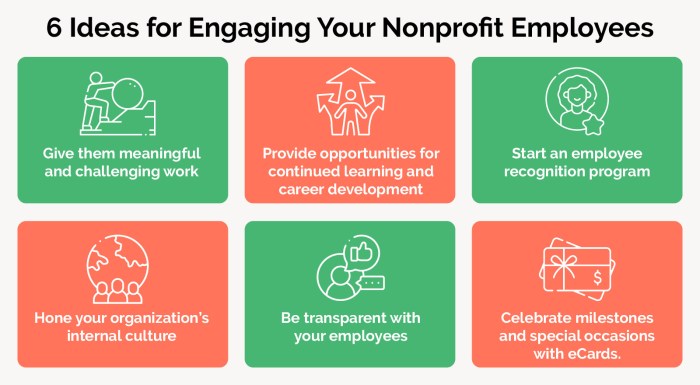
Boosting employee engagement in a small business doesn’t require a large budget. Many impactful strategies can be implemented with minimal financial investment, focusing instead on creativity and genuine appreciation for your team. Prioritizing these low-cost options can significantly improve morale and productivity, fostering a more positive and collaborative work environment.
Budget-Friendly Engagement Activities
Implementing engaging activities needn’t break the bank. Here are five cost-effective ways to boost morale and improve employee engagement, demonstrating the significant impact of small gestures.
| Activity | Cost | Time Commitment | Expected Outcome |
|---|---|---|---|
| Team Lunch | Low (Potluck style minimizes cost) | 1 hour | Improved team cohesion, informal communication, and stress reduction. |
| Employee Recognition Program (Verbal & Written) | Very Low (Time investment only) | Ongoing (5-10 minutes per recognition) | Increased motivation, improved morale, and stronger sense of belonging. |
| Office Games/Competitions | Low (Use existing resources or inexpensive materials) | 30-60 minutes | Increased team spirit, friendly competition, and improved communication. |
| Volunteer Day | Low (Transportation costs may apply) | 4 hours | Improved team bonding, increased sense of purpose, and positive community impact. |
| “Bring Your Pet to Work” Day | Minimal (Signage, treats optional) | 1 day | Improved mood, reduced stress, and increased employee satisfaction. |
Implementing a Minimal-Resource Team-Building Activity
A simple yet effective team-building activity is a collaborative problem-solving exercise using readily available materials. For example, a “Marshmallow Challenge” requires only marshmallows, spaghetti, string, and tape. Teams are tasked with building the tallest freestanding structure they can. This activity encourages teamwork, communication, and creative problem-solving.The implementation process involves:
1. Gather Materials
Acquire the necessary materials (marshmallows, spaghetti, string, tape). Ensure there are enough for each team.
2. Divide into Teams
Split employees into teams of 3-5 people.
3. Set the Rules and Time Limit
Explain the challenge, rules (e.g., no glue, must be freestanding), and time limit (e.g., 20 minutes).
4. Facilitate the Activity
Observe teams, offer encouragement, but avoid direct intervention unless absolutely necessary.
5. Debrief and Reflect
After the time limit, discuss the process, successes, and challenges faced. Focus on teamwork and problem-solving strategies.
Implementing a Peer-to-Peer Recognition Program
A peer-to-peer recognition program fosters a culture of appreciation and encourages positive interactions. It is highly effective in improving morale and employee engagement.A step-by-step guide includes:
1. Establish Recognition Criteria
Define what behaviors or achievements are worthy of recognition. This could include exceeding expectations, helpfulness, teamwork, or innovation.
2. Choose a Recognition Method
Select a simple method, such as a dedicated online platform, a suggestion box, or simply verbal recognition with a written note.
3. Communicate the Program
Clearly explain the program to all employees, emphasizing the importance of peer recognition.
4. Encourage Participation
Promote active participation by highlighting successful examples of peer recognition.
5. Regularly Review and Refine
Monitor the program’s effectiveness and make adjustments as needed to ensure its ongoing success. Consider adding incentives or rotating recognition platforms to keep it engaging.
Improving Communication & Collaboration
Effective communication and collaboration are cornerstones of a thriving small business. Open dialogue fosters trust, boosts morale, and ultimately drives productivity. When team members feel heard and understood, they are more likely to contribute their best work and feel a stronger sense of ownership and commitment to the company’s success. Conversely, poor communication can lead to misunderstandings, decreased efficiency, and even employee burnout.
Investing in improving these areas is an investment in the long-term health and success of the business.
Strategies for enhancing communication and collaboration should be tailored to the specific needs and size of the small business. However, several key approaches consistently prove effective in fostering a more connected and productive work environment. These strategies focus on creating a culture of transparency, providing multiple avenues for communication, and actively encouraging feedback.
Strategies for Enhancing Open and Transparent Communication
Implementing effective communication strategies requires a multi-pronged approach. The following strategies focus on building trust, promoting open dialogue, and ensuring everyone feels valued and informed.
- Regular Team Meetings: Schedule short, frequent team meetings (weekly or bi-weekly) to discuss updates, address concerns, and brainstorm ideas. These meetings should have a clear agenda and encourage open participation from all members. Rotating meeting leadership can also help distribute responsibility and empower team members.
- Open-Door Policy: Encourage open communication by establishing an “open-door” policy where employees feel comfortable approaching management with questions, concerns, or suggestions at any time. This fosters a culture of trust and transparency, ensuring issues are addressed promptly before they escalate.
- Transparent Communication of Company Goals and Performance: Regularly share company performance data, goals, and challenges with the team. This transparency builds trust and allows employees to understand how their individual contributions impact the overall success of the business. Regular updates, perhaps monthly, can keep everyone aligned and motivated.
Effective Communication Tools for Small Businesses
Small businesses often operate with limited budgets, but there are many affordable and effective communication tools available. Choosing the right tools depends on the specific needs of the business and the team’s preferences. The key is to select tools that facilitate seamless communication and collaboration without adding unnecessary complexity or cost.
- Slack: A popular platform offering instant messaging, file sharing, and channels for different projects or teams. Its free plan offers sufficient features for many small businesses.
- Microsoft Teams: Integrated with other Microsoft Office applications, Teams provides similar functionality to Slack, including chat, video conferencing, and file sharing. A basic plan is often free or low-cost.
- Google Workspace: This suite includes Gmail, Google Chat, Google Meet, and Google Drive, providing a comprehensive communication and collaboration solution. A basic plan is usually affordable for small teams.
- Trello or Asana: These project management tools allow for task assignment, progress tracking, and team collaboration. They offer free plans with sufficient functionality for smaller businesses.
Benefits and Challenges of Different Communication Channels
Different communication channels offer unique advantages and disadvantages. Understanding these nuances is crucial for selecting the most appropriate tool for a given situation and maximizing its effectiveness.
- Email:
- Benefits: Formal record of communication, asynchronous communication (allows for responses at a later time), suitable for detailed information.
- Challenges: Can be easily overlooked, slow response times, lacks immediacy.
- Instant Messaging:
- Benefits: Real-time communication, quick responses, facilitates quick problem-solving.
- Challenges: Can be overwhelming with constant notifications, may lack formality for sensitive topics, information may not be easily archived.
- Team Meetings:
- Benefits: Facilitates brainstorming, fosters team cohesion, allows for face-to-face interaction.
- Challenges: Can be time-consuming, requires scheduling coordination, may not be suitable for quick updates or informal discussions.
Fostering a Positive Work Environment
A positive work environment is crucial for employee engagement in small businesses. It fosters a sense of belonging, boosts morale, and ultimately contributes to increased productivity and reduced turnover. Creating this environment isn’t about grand gestures; it’s about consistent, thoughtful actions that build a supportive and respectful culture.Creating a positive work environment involves several key components that work synergistically.
A supportive atmosphere isn’t simply the absence of negativity; it’s the active cultivation of positive interactions and a shared sense of purpose.
Key Elements of a Positive Work Environment
Five key elements contribute to a positive and supportive work environment in small businesses: open communication, mutual respect, opportunities for growth, work-life balance, and a sense of team cohesion. Open communication ensures everyone feels heard and valued. Mutual respect fosters a collaborative atmosphere where differing opinions are welcomed. Opportunities for growth provide employees with a sense of purpose and career progression.
Work-life balance acknowledges the importance of employees’ personal lives, preventing burnout. Finally, team cohesion creates a sense of camaraderie and shared goals.
Cultivating a Culture of Appreciation and Recognition
Building a culture of appreciation and recognition involves more than just annual reviews. Small, consistent acts of acknowledgement go a long way in boosting morale and showing employees they are valued. This can include verbal praise for a job well done, public acknowledgment of achievements during team meetings, small gifts or bonuses for exceptional contributions, or simply taking the time to listen to employees’ concerns and ideas.
For example, a small business owner might send a handwritten thank-you note to an employee who went above and beyond on a project, or publicly acknowledge an employee’s creative solution during a team meeting. Regularly celebrating successes, both big and small, helps to foster a positive and appreciative work environment.
Leadership’s Role in Cultivating a Positive Work Environment
Leadership plays a pivotal role in shaping the work environment. Effective leadership in this context isn’t defined by inherent qualities but rather by specific actions. Leaders should actively promote open communication by holding regular team meetings, actively soliciting feedback, and ensuring everyone has a voice. They should consistently model respectful behavior, treating all employees with fairness and consideration.
Leaders should provide opportunities for growth by offering training, mentorship, and challenging assignments. They should also actively support work-life balance by encouraging employees to take breaks and utilize vacation time. Finally, leaders should foster team cohesion through team-building activities and by creating opportunities for collaboration. For instance, a leader might implement a “suggestion box” system to gather employee feedback, organize team lunches to encourage social interaction, or actively participate in team-building activities.
Building a highly engaged workforce in a small business requires a multifaceted approach. By implementing the strategies Artikeld—from fostering open communication and creating a positive work environment to providing development opportunities and prioritizing work-life integration—small businesses can cultivate a culture of appreciation and productivity. Remember, engaged employees are not just more productive; they are also more loyal, creative, and committed to the long-term success of the company.
Investing in employee engagement is investing in the future of your small business.
Question & Answer Hub
How can I measure employee engagement without expensive surveys?
Utilize informal methods like regular check-ins, team meetings for open feedback, and observing employee behavior and productivity. Track absenteeism and turnover rates as quantitative indicators.
What if my budget is extremely limited?
Focus on non-monetary incentives like flexible work arrangements, public recognition of achievements, and opportunities for skill development through internal training or mentorship programs.
How do I handle an employee who consistently seems disengaged?
Schedule a private meeting to understand their concerns. Actively listen and explore solutions collaboratively. Consider if there are unmet needs or work-related issues contributing to their disengagement.
How can I encourage more collaboration among employees?
Implement team-based projects, encourage open communication channels, and organize social events to foster a sense of camaraderie and teamwork.


